
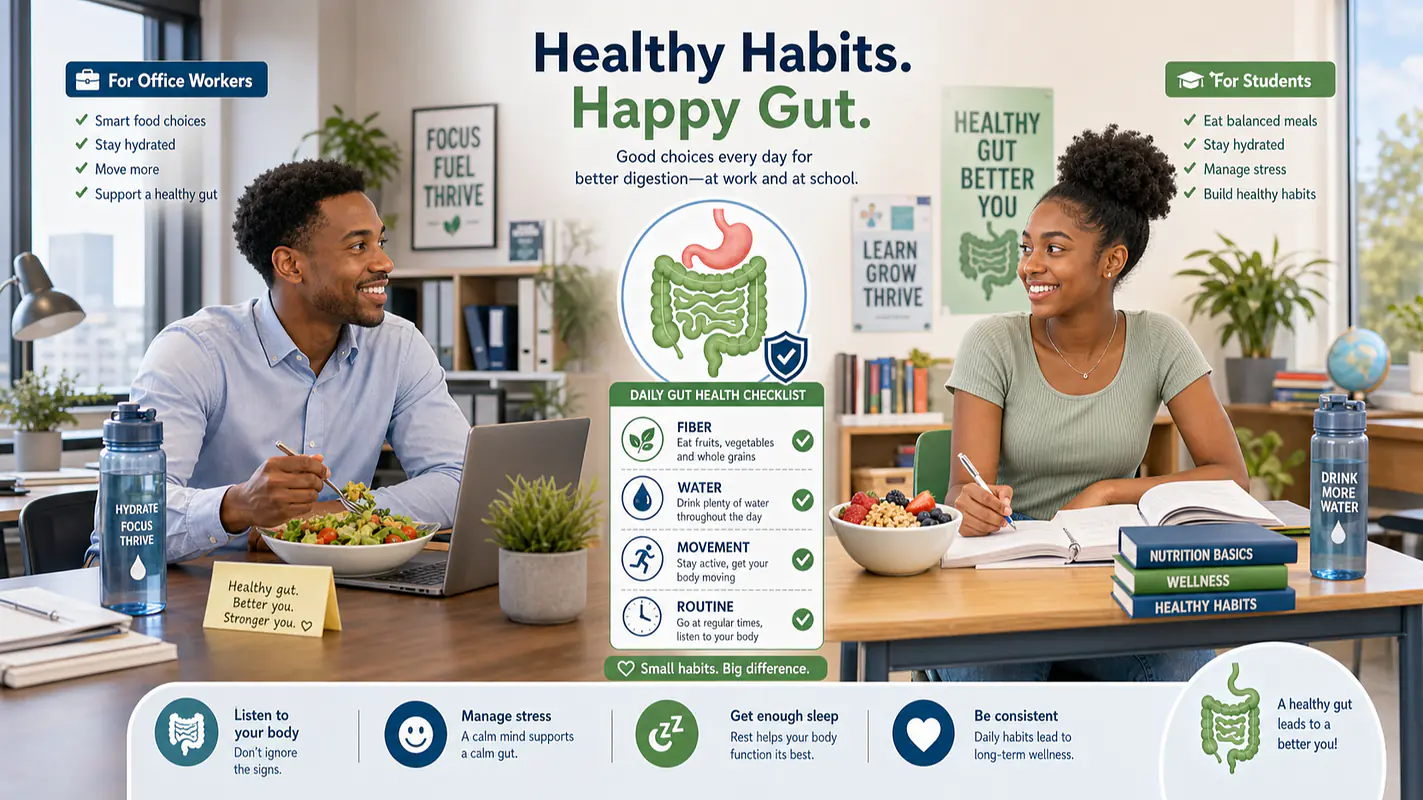
Bowel Health: The Unfiltered Guide for Busy People
Let's talk about something most people avoid bringing up at the dinner table, or anywhere, really. Your bowel health. Yes, that. And before you scroll past, hear this: how well your gut is working has a direct impact on how well you work, in class, at your desk, on the field, wherever life has you (Healthline, 2019; GI Associates, 2025).
Why Your Gut Deserves More Credit
Think of your digestive system as the behind-the-scenes crew keeping the whole show running. When it's doing its job, you barely notice it. When it's not? Suddenly, it's all you can think about (Healthline, 2019; MedStar Health, 2022).
For students pulling all-nighters, office workers chained to their desks, or anyone living by a tight schedule, shift workers, athletes, and military personnel, the gut takes a real beating. Stress, skipped meals, sitting for hours on end, and limited bathroom access all conspire against your digestive system (Gastrodoxs, 2025; GI Associates, 2025). And the result? Bloating, constipation, and unpredictable bathroom urgency, none of which pair well with a 9 AM lecture or a board meeting.
So, What Does "Normal" Even Look Like?
Here's something that surprises most people: there's no single "correct" number of times to go. Anywhere from three times a day to three times a week is considered normal, as long as it's consistent and comfortable for you (Healthline, 2019; Cleveland Clinic, 2026).
Doctors actually use something called the Bristol Stool Chart to classify stool into seven types.
The gold standard?
Types 3 and 4: soft, sausage-shaped, and easy to pass without turning the bathroom into a CrossFit session (Cleveland Clinic, 2026; WebMD, 2024).
Healthy stool is also typically medium to dark brown, formed but not rock-hard, and shouldn't leave you feeling like something's still stuck (MedStar Health, 2022; Cleveland Clinic, 2026).
The gold standard?
Types 3 and 4: soft, sausage-shaped, and easy to pass without turning the bathroom into a CrossFit session (Cleveland Clinic, 2026; WebMD, 2024).
Healthy stool is also typically medium to dark brown, formed but not rock-hard, and shouldn't leave you feeling like something's still stuck (MedStar Health, 2022; Cleveland Clinic, 2026).
Red flags to watch for include very hard or lumpy stool, constant straining, loose watery stool that keeps recurring, or any persistent changes in colour, especially red, black, or very pale (Cleveland Clinic, 2026; MedStar Health, 2022). Those last ones warrant a doctor's visit, not just a Google spiral (MedStar Health, 2022; GoodRx, 2021).
The Usual Suspects: What's Wrecking Your Gut
Students tend to survive on caffeine, convenience food, and stress, a trifecta that's essentially the opposite of gut-friendly (Healthline, 2019; Healthline, 2018).
Office workers sit for hours, skip bathroom breaks during back-to-back meetings, and inhale lunch at their desks. All of this slows things down intestinally and invites constipation to settle in (Carenewengland, n.d.; GI Associates, 2025).
People with regimented schedules, think shift workers, military personnel, or anyone who can't just pop to the loo whenever nature calls, often can't respond to their body's signals in time, and over time, the body stops sending them as loudly (East Yorkshire Hospitals NHS Trust, 2024; Gastrodoxs, 2025).
The long-term cost of all this? Weakened gut signals, chronic bloating, and a higher risk of hemorrhoids from repeated straining, which sounds unpleasant because it is (East Yorkshire Hospitals NHS Trust, 2024; University Hospitals of Leicester, 2023).
What You Can Actually Do About It
1. Eat More Fibre (Seriously)
Fibre is what gives stool its bulk and keeps things moving at a healthy pace. Most adults need about 25–35 grams per day, which most people aren't getting (Carenewengland, n.d.; Healthline, 2018). The fix doesn't have to be complicated; oatmeal at breakfast, fruit and nuts as snacks, and vegetables with lunch and dinner go a long way (Carenewengland, n.d.; Healthline, 2018). Just ramp up gradually and drink more water alongside it, or you'll swap one problem for another, hello, gas and bloating (Carenewengland, n.d.; Healthline, 2018).
2. Actually Drink Water
This one seems obvious, but it's shockingly easy to go most of the day surviving on coffee and energy drinks. While caffeine can briefly stimulate the bowel, it also mildly dehydrates you, which ultimately works against you (Carenewengland, n.d.; Healthline, 2018). Water softens stool and helps it glide through your intestines the way it's supposed to. Keep a bottle at your desk or in your bag and sip consistently (Carenewengland, n.d.; Healthline, 2018).
3. Move Your Body
A sedentary body is a sluggish gut. Regular movement stimulates intestinal motility, basically, it gets things moving (Healthline, 2019; GI Associates, 2025). You don't need a gym membership. Even short walks, stair climbs, or a quick stretch every hour can make a noticeable difference if you're desk-bound (Hinge Health, 2026; GI Associates, 2025). Aim for 20–30 minutes of moderate exercise most days, walking, jogging, cycling, and your gut will thank you (Hinge Health, 2026; GI Associates, 2025).
4. Don't Ignore the Urge
Here's one that's embarrassingly common: you're mid-meeting or mid-lecture, nature knocks, and you tell it to come back later. Fair enough — once. But make a habit of it, and your body gradually stops knocking as loudly. Stool sits longer, dries out, and becomes harder to pass (Carenewengland, n.d.; Gastrodoxs, 2025).
If your schedule doesn't leave much room for spontaneous bathroom breaks, the workaround is simple, build in a consistent daily window instead. First thing in the morning is a popular choice for good reason; the body's natural motility tends to be higher after waking, especially after breakfast. If mornings are too rushed, after dinner in the evening works just as well — you're home, you're winding down, and there's no meeting to sprint back to (Carenewengland, n.d.; Gastrodoxs, 2025). Pick whichever slot fits your life and stick to it. Your bowel is surprisingly trainable — it just needs you to show up at roughly the same time each day.
5. Fix Your Toilet Posture
Nobody talks about this, but it matters more than you'd think. Sitting upright on a standard toilet isn't actually the most efficient position for passing stool. Leaning slightly forward and propping your feet up on a small stool so your knees are above your hips mimics a squat, straightens the rectal angle, and significantly reduces straining (East Yorkshire Hospitals NHS Trust, 2024; Mayo Clinic Press, 2026). Simple change, real difference, especially if you deal with chronic constipation or that annoying feeling of incomplete emptying (East Yorkshire Hospitals NHS Trust, 2024; University Hospitals of Leicester, 2023).
6. Manage Your Stress
Your brain and your gut are in constant conversation via something called the brain–gut axis, and stress sends some very unhelpful messages (Healthline, 2019; GI Associates, 2025). Exam pressure, looming deadlines, heavy workloads, all of it can throw your bowel habits into chaos, speeding things up or grinding them to a halt (Healthline, 2019; GI Associates, 2025). Deep breathing, short walks away from your screen, mindfulness, or even just stepping outside for five minutes can help take the edge off, and your gut will feel it too (Healthline, 2019; Healthline, 2018).
When to Stop Googling and See a Doctor
Lifestyle tweaks fix a lot, but not everything. If you notice blood in your stool, black or tarry stool, severe abdominal pain, unexplained weight loss, fever with bowel changes, or constipation or diarrhea that won't quit for more than two weeks, don't wait it out (MedStar Health, 2022; GoodRx, 2021). These can be signs of conditions like irritable bowel syndrome, inflammatory bowel disease, or infections that need actual medical attention, not just more fibre (MedStar Health, 2022; Mayo Clinic Press, 2026).
Your gut isn't a glamorous topic, but it's a genuinely important one. The good news is that most of what keeps it happy, fibre, water, movement, routine, and stress management, is already within reach, even with a packed schedule (Healthline, 2019; GI Associates, 2025). Small, consistent changes really do add up, and your body, and your productivity will reflect that (Healthline, 2019; GI Associates, 2025).
References
Carenewengland. (n.d.). Simple tips for better bowel movements.
Cleveland Clinic. (2026). Bristol stool chart: Types & what they mean.
Gastrodoxs. (2025). 5 morning habits for healthy & regular digestion.
GI Associates. (2025). Digestive health: 10 habits for a stronger gut.
GoodRx. (2021). Bristol stool chart: 7 types of poop and what they mean.
Healthline. (2018). 12 tips to improve digestion naturally for better gut health.
Healthline. (2019). Bowel movement: What’s normal and how to poop better.
Hinge Health. (2026). 7 exercises for constipation to get things moving.
Mayo Clinic Press. (2026). How to poop the right way.
MedStar Health. (2022). What healthy bowel movements look like, and when to see a doctor.
University Hospitals of Leicester. (2023). Bowel health – top tips from continence nurse.
WebMD. (2024). Bristol stool chart: Types of poop – shapes, textures & meaning.