
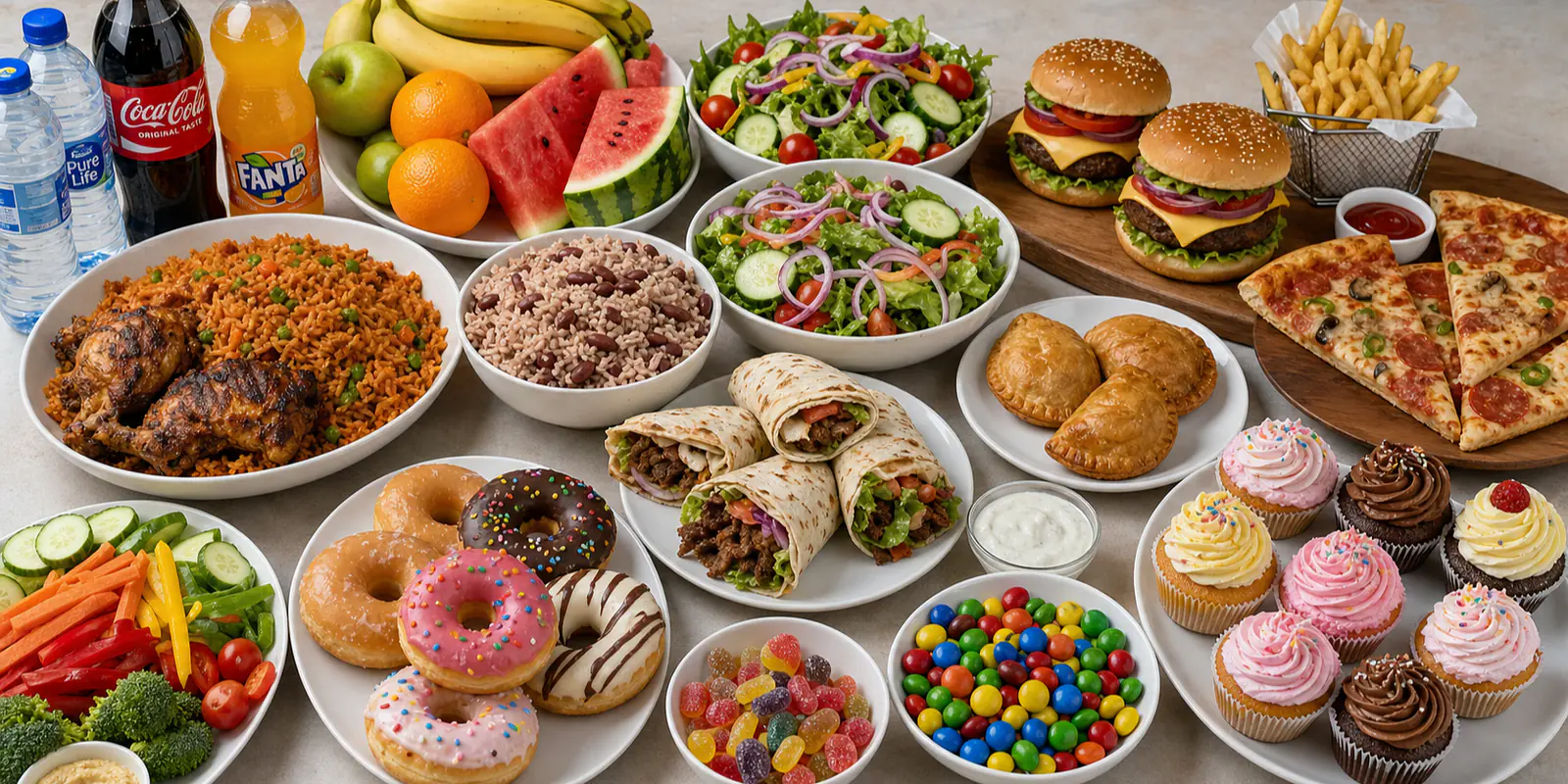
Choosing the Best Option, One Plate at a Time
You may not always have organic, “super healthy” food in front of you, but you almost always have a choice. The real power is learning to pick the best option available, again and again, until it becomes a lifestyle.
Healthy eating is not about perfection. It’s about understanding your food, being honest about your options, and choosing what will nourish you better in that moment.
What Is a Balanced Diet (In Simple Terms)?
A balanced diet is simply eating different types of foods in the right amounts so your body gets what it needs to work well, stay strong, and fight sickness.
Think of it like building a complete team:
- Some foods give you energy.
- Some build and repair your body.
- Some protect you from diseases.
- Some keep your digestion and system running smoothly.
When your plate regularly mixes these different roles, you are eating a balanced diet—even if the food is local, simple, and not “fancy.”
The Main Classes of Food (Easy Explanation)
Nutrition experts talk about nutrients and food groups, but let’s keep it simple.
- Carbohydrates (Energy foods)
These are your body’s main fuel. They help you move, think, and work.
Examples: rice, garri, fufu, yam, plantain, bread, pasta, potatoes, pap, oats. - Proteins (Body-building foods)
They build and repair muscles, organs, skin, hair, and help you feel full.
Examples: beans, peas, eggs, fish, chicken, goat meat, beef (in moderation), milk, yoghurt, soy, groundnuts. - Fats and Oils (Support and energy)
Your body needs some fat for hormones, brain function, and energy, but in small amounts.
Better sources: groundnuts, cashews, avocado, fish, eggs, olive oil, canola oil, small quantity of vegetable oil. Less is better when it comes to deep-fried foods. - Vitamins and Minerals (Protective foods)
They keep your eyes, skin, blood, and immune system healthy. They don’t give energy directly but protect your body.
Examples: vegetables (ugu, efo, okra, bitter leaf, waterleaf, cabbage, carrot, broccoli, cauliflower, tomato, onion) and fruits (orange, banana, apple, watermelon, pawpaw, mango). - Water and Fibre (Cleaners and movers)
Water helps digestion, blood flow, and temperature control. Fibre helps your stomach and intestines work properly and prevents constipation.
Fibre sources: beans, vegetables, fruits, whole grains like oats and brown rice.
If you keep seeing these groups show up across your day, you’re already doing better than you think.
How to Match Foods on Your Plate
You can think of a balanced plate in three simple parts:
- Half of the plate: vegetables and/or fruits (protective foods).
- One quarter: carbs (energy foods).
- One quarter: protein (body-building foods).
In Nigerian terms, examples could look like this:
Breakfast: Oats (carb + fibre) cooked with milk (protein) and topped with banana or pawpaw (vitamins)
Mid-morning: A handful of cashew nuts/groundnuts (healthy fat + protein) and an orange (vitamins)
Lunch: Brown rice or ofada (carb) + efo riro loaded with vegetables (vitamins + fibre) + fish or chicken (protein)
Evening: Beans porridge (protein + carb) with a small side of boiled plantain and some sliced cucumber or tomato (fibre + vitamins)
Mid-morning: A handful of cashew nuts/groundnuts (healthy fat + protein) and an orange (vitamins)
Lunch: Brown rice or ofada (carb) + efo riro loaded with vegetables (vitamins + fibre) + fish or chicken (protein)
Evening: Beans porridge (protein + carb) with a small side of boiled plantain and some sliced cucumber or tomato (fibre + vitamins)
You don’t have to follow this perfectly every day. The idea is to start thinking this way and improving gradually.
When You Don’t Have “Healthy” Options
Real life happens: roadside food, parties, long trips, office canteen, village visits. You won’t always see salad bowls and grilled fish. But you can still choose the better option in front of you.
Here are some practical swaps:
- If everything is fried, pick the option with the least oil and the smallest portion, and avoid adding sugary drinks on top.
- If you must eat white rice, add beans, egg, or fish if available, and some vegetables or even just tomato-onion stew with less oil.
- At a buka or mama put:
- Choose more vegetables in your soup (efo, okra, ugwu) and moderate your swallow size.
- Go for fish or lean meat instead of big, fatty chunks.
- Choose more vegetables in your soup (efo, okra, ugwu) and moderate your swallow size.
- At work:
- Drink water instead of soda.
- If you eat snacks, combine them with a fruit or nuts to make it a bit more balanced.
- Drink water instead of soda.
The key idea: ask yourself, “Among these options, which one will leave my body better off?” Then pick that.
Educate Yourself, Then Do Your Best
You don’t need to become a nutritionist, but knowing the basics of the food classes and how to combine them gives you power.
- You understand why you feel tired when you eat only carbs and no protein.
- You see why you fall sick more when you rarely eat fruits or vegetables.
- You realise that a simple plate of rice, beans, and vegetables can be more powerful than an expensive, sugary snack.
Wellness is not about always having perfect food options. It’s about:
- Knowing what your body needs.
- Looking at what is available.
- Consistently choosing the best option you can, in that moment.
Over time, these small, smart choices add up, to better energy, better mood, and better health.