
Nature’s Blueprint: How Food Shapes Reveal What They Heal
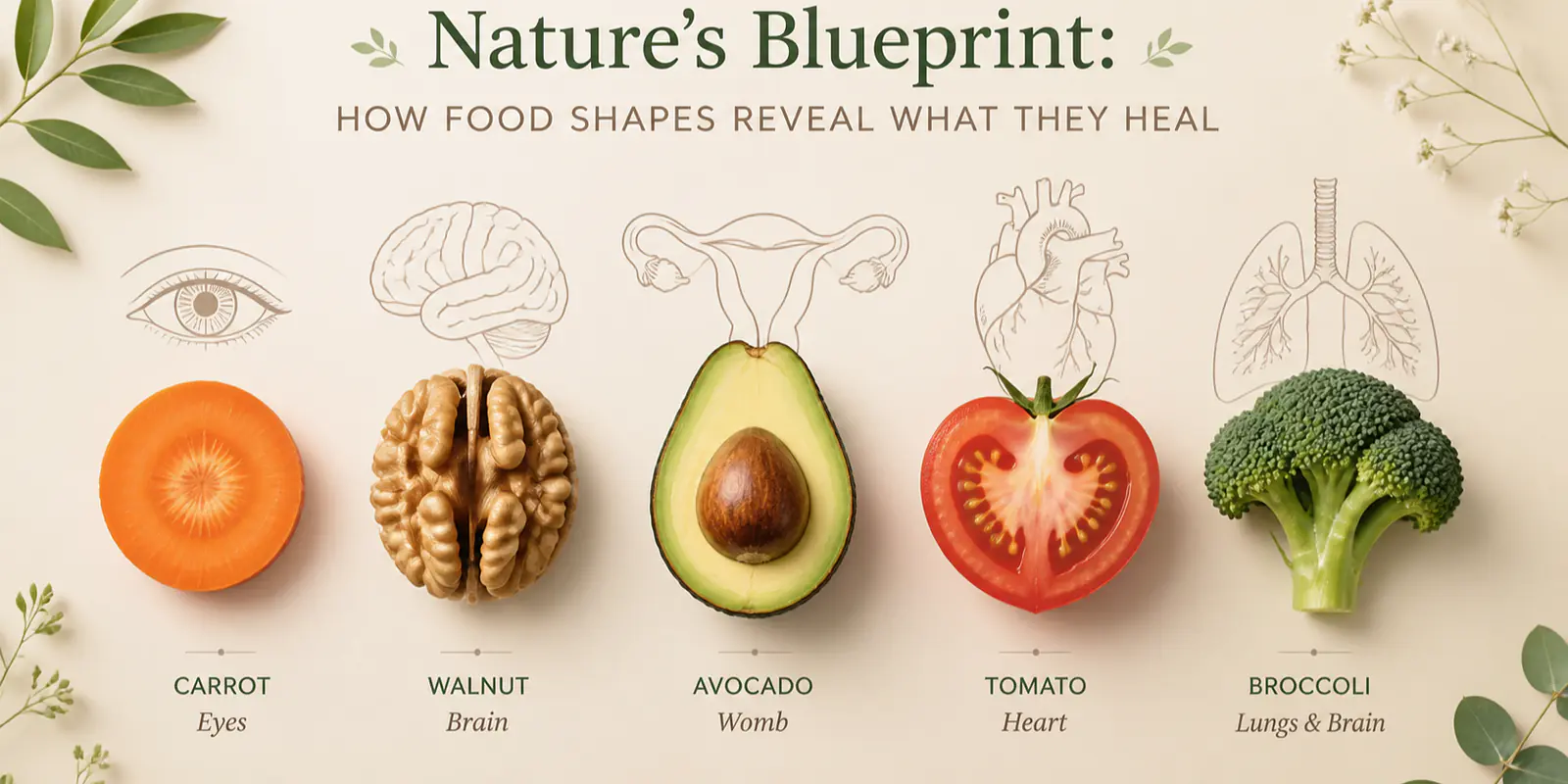
Okay, hear me out. That walnut in your hand? It looks like a tiny brain. That carrot you just sliced? It has an iris. This isn't conspiracy-board stuff, it's a quirky little idea called "body shape" eating, and it's actually a really fun way to think about food.
The concept is simple: some foods are shaped like the body parts they happen to be really good for. Nature left us little hints, and honestly, it's kind of delightful once you start noticing.
(To be clear: the shape itself doesn't do anything. It's the nutrients inside that count. But the visual match? Useful reminder. Cute party trick. Zero downsides.)
Eyes: Carrots & Blueberries
Slice a carrot crosswise and you'll see a circle with rings radiating outward, it genuinely looks like an eye. And carrots are loaded with vitamin A and carotenoids like lutein and zeaxanthin, which are basically your retinas' best friends. These nutrients help protect against macular degeneration and cataracts. So yes, your grandmother was right about carrots and your eyes.
Blueberries don't look like eyes, but they're in this club because their deep purple-blue pigment (from anthocyanins) protects the delicate tissues inside your eyes from oxidative damage. Tiny, dark, powerful. A handful a day goes a long way.
Brain: Walnuts
This one is almost eerie. Crack open a walnut and you've got two wrinkly hemispheres that look exactly like a miniature brain, grooves and all. And sure enough, walnuts are one of the best foods for your actual brain, high in omega-3 fatty acids, vitamin E, and polyphenols that fight inflammation and protect brain cells.
Research links regular walnut consumption to better cognitive function and slower mental aging. So next time you snack on walnuts, you can feel very sophisticated about it.
Heart: Tomatoes & Grapes
Cut a tomato in half and you'll see chambers separated by walls, just like the heart. Dramatic? Maybe. Accurate? Also yes.
Tomatoes are rich in lycopene and vitamin C, both linked to cardiovascular health and reducing oxidative damage in blood vessels. Eat them cooked for an even bigger lycopene punch.
Grapes grow in tight clusters that look like little bundles of... blood vessels (or, if we're being generous, tiny lung sacs, more on that below). Either way, their antioxidants support vascular health and can help lower the risk of heart disease. Bonus points if you go for the dark purple ones.
Lungs: Broccoli & Grapes
Look at a head of broccoli from the side, it literally branches like bronchial tubes. From above, it even resembles the folds of a brain. Broccoli is an overachiever.
It contains glucosinolates, which the body converts into sulforaphane, a compound associated with detoxification, reduced inflammation, and even better memory as we age. It's also packed with vitamin C, vitamin K, and folate. Broccoli is basically the class president of vegetables.
Grapes make a second appearance here because their cluster structure looks like the alveoli, tiny air sacs in your lungs where oxygen exchange happens. Their antioxidants reduce inflammation in lung tissue and have been linked to lower lung cancer risk. One food, two body systems. Efficient.
Pancreas: Sweet Potatoes
The long, curved shape of a sweet potato is surprisingly similar to the pancreas, the organ that manages insulin and blood sugar. And, you guessed it, sweet potatoes are genuinely great for blood sugar regulation.
They're packed with fiber and complex carbs, which means they release energy slowly instead of spiking your glucose. Their carotenoids also help with overall metabolic health. If you're thinking about insulin resistance or just want steadier energy through the day, sweet potatoes are your friend.
Stomach: Ginger
Fresh ginger root is all bumps and twists, a little chaotic, honestly, much like digestion when things go wrong. But ginger has been used to settle stomachs for thousands of years, and modern science backs it up.
The active compounds (gingerols) reduce nausea, ease bloating, and help move things along in the gut. It's anti-inflammatory and soothing, the culinary equivalent of a stomach pat. Add it to tea, stir-fries, smoothies, or just chew a small piece when your gut is grumpy.
Kidneys: Kidney Beans
The name isn't a coincidence. Kidney beans are shaped so much like kidneys that they were literally named after them. And yes, they're good for kidney health, mostly by supporting the conditions that make kidneys happy: stable blood pressure, healthy blood sugar, and good cholesterol levels.
They're high in plant protein, fiber, potassium, and magnesium. A bowl of kidney bean chili is doing more for you than you might think.
Bones: Celery & Leafy Greens
Celery stalks are long and slightly ridged, like bones. They contain vitamin K, which plays a role in bone metabolism. Not the MVP of bone foods, but a solid supporting cast member when paired with the real heavyweights: dark leafy greens.
Kale, spinach, and similar greens are rich in calcium, magnesium, and vitamin K, the holy trinity for bone density. Your skeleton is basically asking for a big green salad.
Reproductive Organ: Olives & Figs
Olives are roughly the shape of ovaries, and olive oil has been central to Mediterranean diets for millennia, diets associated with hormonal health and longevity. The healthy monounsaturated fats and antioxidants in olives support circulation and hormonal balance.
Figs, with their many tiny seeds and somewhat suggestive shape, have long been linked to fertility across cultures. They're rich in fiber, minerals, and plant compounds that support hormonal health in both men and women. Ancient medicine was onto something.
Womb and Hormones: Avocado
Slice an avocado in half and you’ll see a shape that mirrors a pregnant belly or womb, with its central seed resting where new life would grow. This gentle visual cue reflects what the fruit offers the body: healthy fats that support hormone balance, folate for fertility and pregnancy, and antioxidants that protect cells and circulation. Adding avocado to your plate becomes a daily ritual of nourishing your reproductive system and honoring the creative, life-giving energy within your body.
Slice an avocado in half and you’ll see a shape that mirrors a pregnant belly or womb, with its central seed resting where new life would grow. This gentle visual cue reflects what the fruit offers the body: healthy fats that support hormone balance, folate for fertility and pregnancy, and antioxidants that protect cells and circulation. Adding avocado to your plate becomes a daily ritual of nourishing your reproductive system and honoring the creative, life-giving energy within your body.
So, Should You Eat by Shape?
Think of it as a fun memory tool, not a rigid diet. When you're planning meals and want to support a specific body system, your heart, your brain, your gut, it's a playful prompt: what food looks like what I want to nourish?
The actual work is done by the nutrients. But the visual cue? It makes you notice food differently. It makes a walnut feel more intentional. A tomato more interesting. And honestly, anything that gets you eating more whole, colorful, real food is a win.
The creator left little hints everywhere. Might as well look.