
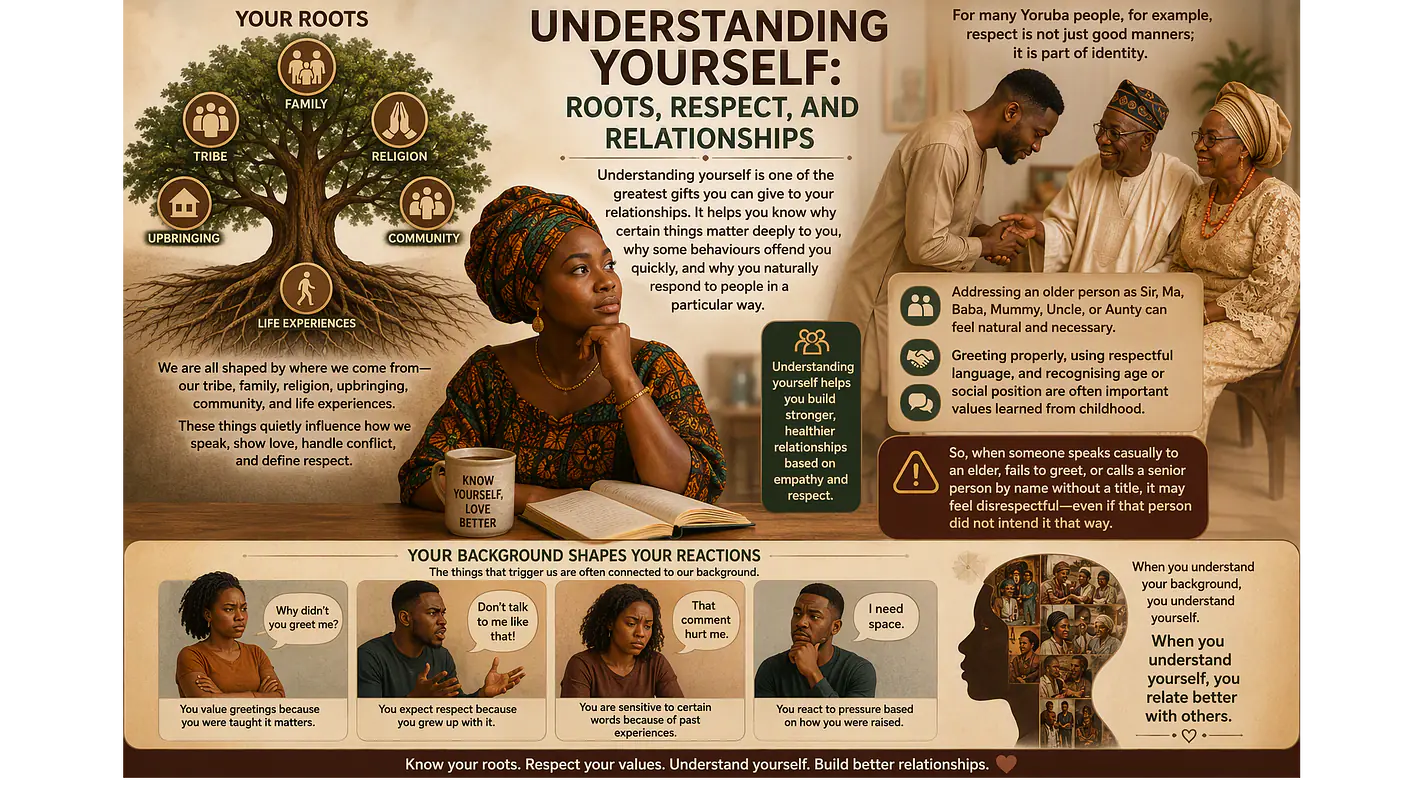
Understanding Yourself: Roots, Respect, and Relationships
Understanding yourself is one of the greatest gifts you can give to your relationships. It helps you know why certain things matter deeply to you, why some behaviours offend you quickly, and why you naturally respond to people in a particular way.
We are all shaped by where we come from, our tribe, family, religion, upbringing, community, and life experiences. These things quietly influence how we speak, show love, handle conflict, and define respect.
For many Yoruba people, for example, respect is not just good manners; it is part of identity. Addressing an older person as Sir, Ma, Baba, Mummy, Uncle, or Aunty can feel natural and necessary. Greeting properly, using respectful language, and recognizing age or social position are often important values learned from childhood.
So, when someone speaks casually to an elder, fails to greet, or calls a senior person by name without a title, it may feel disrespectful, even if that person did not intend it that way.
Your Background Shapes Your Reactions
The things that trigger us are often connected to our background.
A person raised in a home where children must greet everyone in the morning may feel uncomfortable around someone who walks into a room silently. Someone raised to speak softly around elders may interpret a direct, blunt person as rude. Another person may have grown up in an environment where everyone speaks freely, regardless of age, and may not understand why titles are such a serious matter.
Neither person has to be a bad human being. They may simply be operating from different cultural training.
This does not mean we should excuse poor behaviour. Rudeness is still rudeness. Disrespect, insults, humiliation, and deliberate disregard for others should not be defended in the name of culture. However, it is helpful to pause before concluding that someone meant to disrespect you.
Sometimes, they may simply be unaware.
Learn the Difference Between Intent and Impact
A person from another tribe, family, or background may not call you Sir or Ma. They may address older people by their names, speak in a more relaxed way, or communicate without the formal greetings you are used to.
That does not automatically mean they are proud, uncultured, or intentionally rude. It may be an unconscious habit from their own background.
At the same time, the impact still matters. If their way of speaking makes you uncomfortable, you are allowed to communicate that respectfully.
You can say:
“Where I come from, calling older people Sir or Ma is an important sign of respect. I would appreciate it if you used that when speaking with me.”
This is better than silently carrying offence, judging the person immediately, or responding with anger.
Understand Others Without Losing Yourself
Understanding other people does not mean abandoning your values. You can honour your culture and still make room for people who were raised differently.
This is especially important in friendships, marriage, workplaces, churches, schools, and business relationships. Nigeria is beautifully diverse, but that diversity can create misunderstandings when we assume everyone sees respect, gender roles, communication, or family obligations exactly as we do.
Some communities may have traditions or social attitudes that place stronger limits on women or speak to women in ways that feel dismissive. It is important to recognize these patterns without using them to label every individual from that group. Culture influences people, but it does not completely define them. Every person is still responsible for how they treat others.
The goal is not to say, “That is just how they are.” The goal is to understand where a behaviour may come from, then decide what you will accept, address, or set boundaries around.
Self-Knowledge Creates Better Relationships
When you understand yourself, you become less reactive. You begin to ask better questions:
- Why did that comment upset me so much?
- Is this person being deliberately disrespectful, or are they unfamiliar with my values?
- Have I clearly communicated what matters to me?
- Am I judging them based only on my own upbringing?
- What boundary do I need to set if the behaviour continues?
These questions can prevent unnecessary conflict. They also help us build relationships based on communication rather than assumptions.
A healthy relationship does not require two people to come from the same tribe, family, or background. It requires humility, curiosity, mutual respect, and the willingness to learn each other.
Final Thought
Knowing your roots helps you understand your heart. Knowing another person’s roots helps you understand their behaviour.
You may value titles, greetings, respect for elders, modest speech, independence, openness, or direct communication because of how you were raised. Someone else may value things differently. The wisdom is in recognizing the difference without quickly turning it into an attack.
Understand yourself. Honour your background. Learn about others. Speak up when needed. And remember: many conflicts are not caused by hatred, they are caused by people who have never taken the time to understand each other.